

Indoor growing gives you control, but that control runs on power. Light, climate, airflow, dehumidification. Every gram of pharmaceutical grade flower we ship carries an energy cost behind it. Managing that cost well is not a side task. It is part of growing well.
Waste is not just a line on a bill. It is a signal. When a room burns more power than it should, it usually means the space is fighting itself, working harder than it needs to hold the conditions the plants depend on. We treat that as a problem to solve at the design stage, not something to patch later.
Where the energy actually goes
In a sealed indoor farm, two things dominate the load. Lighting and climate control. The lights draw power directly, and then they add heat, which the climate system has to pull back out. So a badly planned room pays twice. Once to make the light, once to remove what the light produces.
Dehumidification is the quiet third. Cannabis transpires heavily, and holding water activity in a tight band means moving a lot of moisture, all day, every day. Get the room envelope wrong and that system never rests.
Design decides most of it
By the time a farm is built, most of its efficiency is already fixed. You cannot fix a leaky room with a better spreadsheet. We design for control first, because a room that holds its own conditions needs far less power to correct them.
The principles are simple to state and hard to execute
- Seal the envelope so outside conditions stay outside.
- Match light output to canopy need, not to a catalogue number.
- Capture and reuse heat instead of fighting it twice.
- Zone the rooms so each stage gets exactly what it needs.
- Size climate equipment to the real load, not a guess.
None of this is exotic. It is discipline applied early, when it still costs nothing to get right.
Why this matters beyond the bill
Lower waste is cheaper, and that is real. But the reason we care runs deeper. A farm that manages its resources well is a farm that holds steady. Stable power draw means stable temperature, stable humidity, stable water activity. And stability is what shows up in the flower.
A room that swings, that overshoots and corrects and overshoots again, grows plants that feel those swings. Terpenes are volatile. Trichomes are fragile. Consistency in the room becomes consistency in the batch, and consistency in the batch is what a serious buyer is actually paying for.
Efficient growing is not about using less. It is about wasting less while the flower stays exactly the same.
What a buyer should read into it
When you assess a supplier, resource management tells you something the marketing never will. A farm that runs tight rooms tends to run a tight operation everywhere else. The same discipline that keeps energy waste low is the discipline that keeps a COA honest and a curing schedule on time.
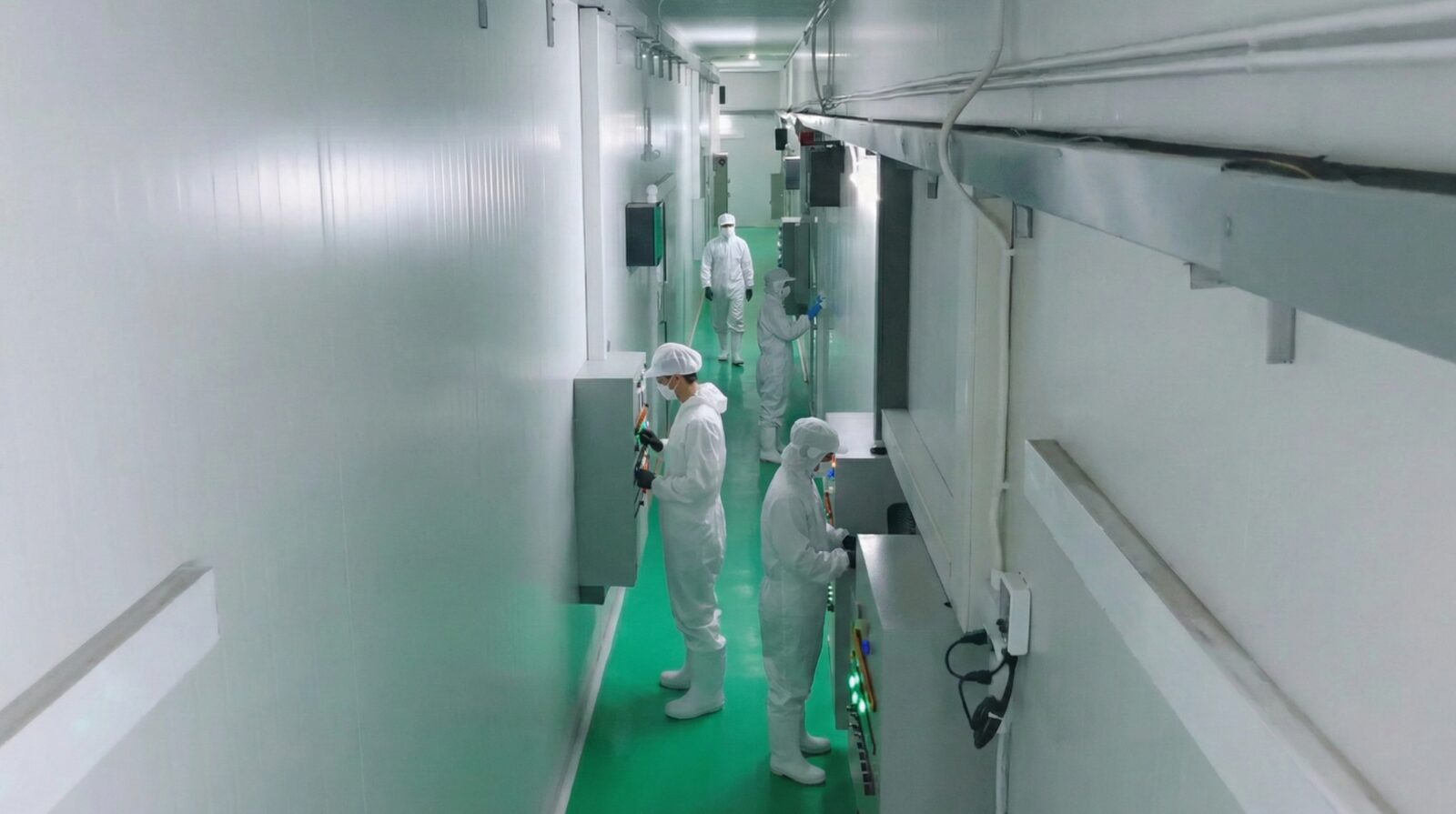
Our farm is fully integrated and sealed, GACP certified, and built to hold its conditions batch after batch. We produce around 500 kg of finished flower a month, more than 7 tons a year, with room to scale. That volume only means something if every kilo lands inside the same specification. Efficient rooms are how we protect that.
The traceability link
Well run rooms also make records cleaner. When conditions stay inside their bands, the data behind each batch stays readable, and full seed to shipment traceability stops being a claim and becomes something you can inspect. Every batch carries a COA from an independent lab, covering cannabinoids, terpenes, pesticides, heavy metals and microbials. The room and the paperwork tell the same story.
Built to hold, built to scale
Efficiency and scale are usually treated as opposites. Grow bigger, waste more. We built to break that link. Because the load is managed at the design level, adding capacity does not mean adding chaos. The rooms behave the same at 500 kg a month as they will when we push past it.
Our exotic flower sits at 22 to 30 percent THC, hand trimmed, slow cured, with water activity standardized across the run. That profile is only repeatable in a farm that controls its environment tightly and pays for it efficiently. White label and OEM programs run on the same rooms, with export ready packaging built in.
For a buyer, the practical takeaway is short. Ask your supplier how they manage their rooms, not just what they charge. A farm that wastes little tends to control much, and control is what puts the same flower in the box every single time. If you want to see how our farm holds that line, we are ready to walk you through it and put a sample in your hands.