
Not every buyer needs the same thing. Flower, biomass and extract are three different products with three different price points, three different buyers, and three different ways to lose money if you pick wrong. We sell all along that chain, and the mistake we see most often has nothing to do with quality. It is buyers paying for a form their market does not sell.
Get the form right and the rest of the deal gets easier. Get it wrong and you are stuck holding inventory that costs too much for what you can do with it.
The three forms, plainly
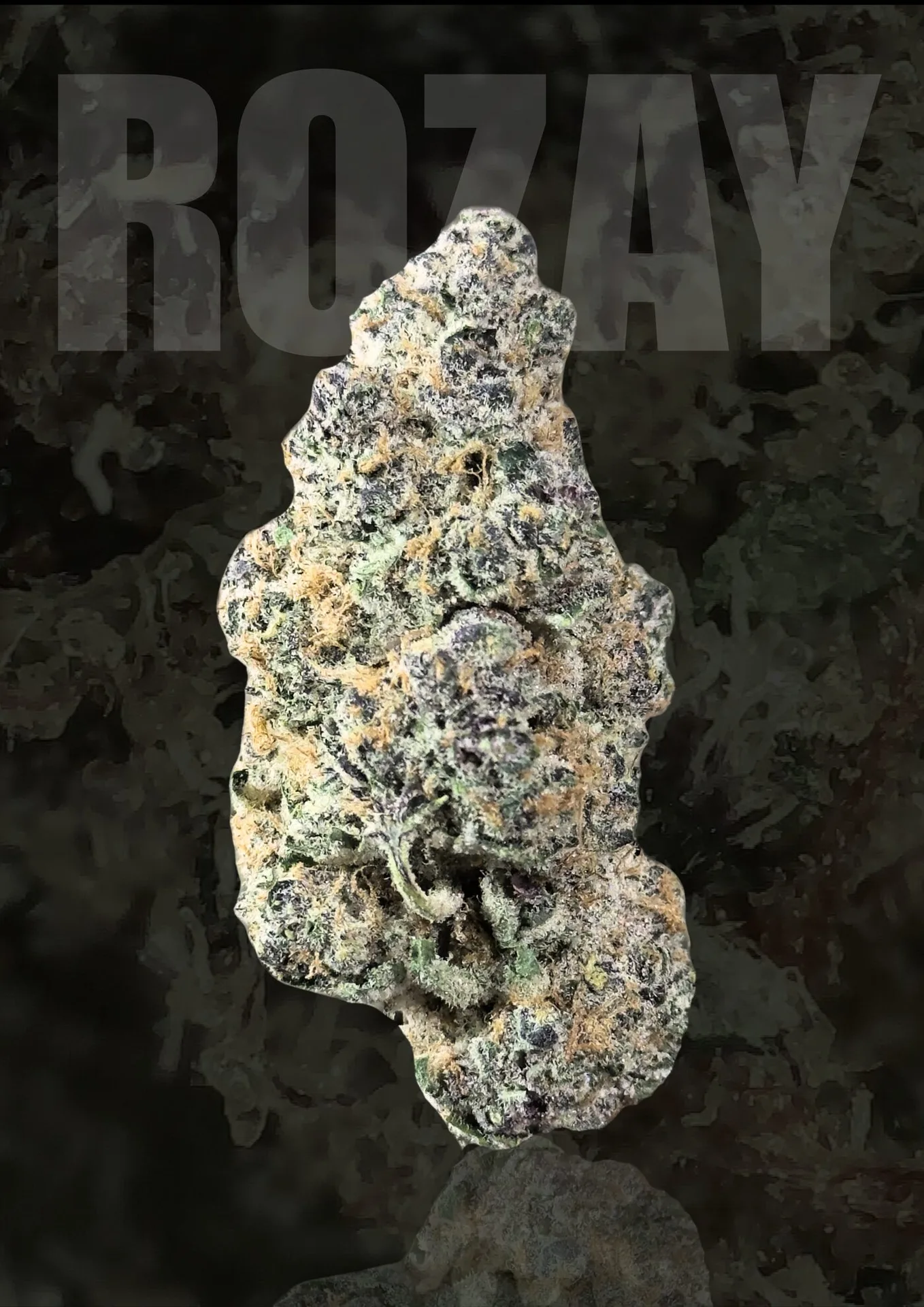
Flower is the finished bud. It is grown to be looked at, weighed by the gram, and sold at retail or dispensed to patients. Appearance, aroma, trim and cure all matter because the customer sees and smells the product before they buy it. This is where our exotic flower lives, at 22 to 30 percent THC, hand trimmed and slow cured.
Biomass is plant material grown for weight, not looks. Whole plant, trim, smalls, sometimes lower grade bud. Nobody smells it in a jar. It exists to be turned into something else, usually crude oil or distillate. It is priced by the kilo and by potency, not by how it looks.
Extract is the concentrate pulled out of flower or biomass. Distillate, full spectrum oil, isolate, resin. It is the input for edibles, vapes, tinctures and pharmaceutical formulations. Small volume, high value, and judged on purity and cannabinoid profile.
Who each form is actually for
Match the form to what you sell. An authorized distributor selling a premium in store experience needs flower, and the top shelf sells the whole shop. An importer supplying pharmacies under a formulated product needs extract or the biomass to make it. A manufacturer running its own extraction line wants biomass priced as input, not finished flower priced as a luxury good.
- Flower for authorized distributors, premium retail, and patient facing pharmacy where the bud is the product.
- Biomass for processors and extractors who own their own conversion and buy on potency per kilo.
- Extract for product makers and pharmaceutical distributors who formulate finished goods.
- A mix for groups that sell flower at retail and route the smalls and trim into their own products.
Where buyers lose money
The classic error is buying flower to feed an extractor. Flower carries the cost of hand trimming, slow curing and careful handling. None of that survives extraction. You crush it into oil and every dollar you paid for looks and cure is gone. If your endpoint is a concentrate, you want biomass priced for that job.
The reverse hurts too. Buyers chasing a cheap per kilo number for a retail shelf end up with product that photographs badly, tests fine but looks tired, and sits in the case while the good jars sell out. Cheap biomass is not a discount on flower. It is a different product.
Buy the form your market actually sells. Paying flower prices for extraction input is money left on the table, and buying biomass for a premium shelf is money left in the case.
Why the paperwork matters more than the form
Whatever form you buy, the number that protects you is on the COA. Every batch we ship carries one from an independent lab, covering cannabinoids, terpenes, pesticides, heavy metals and microbials. For flower that COA sets the shelf claim. For biomass it sets the true price, because you are buying cannabinoid content per kilo, not just weight. For extract it is the whole product, since purity and profile are all the buyer can judge.
Water activity is standardized on our flower, which keeps it stable in transit and on the shelf. Full seed to shipment traceability means every batch, in any form, ties back to the room it grew in. That is what regulated markets ask for at the border, and it is what keeps a reorder simple.
How we are set up to supply it
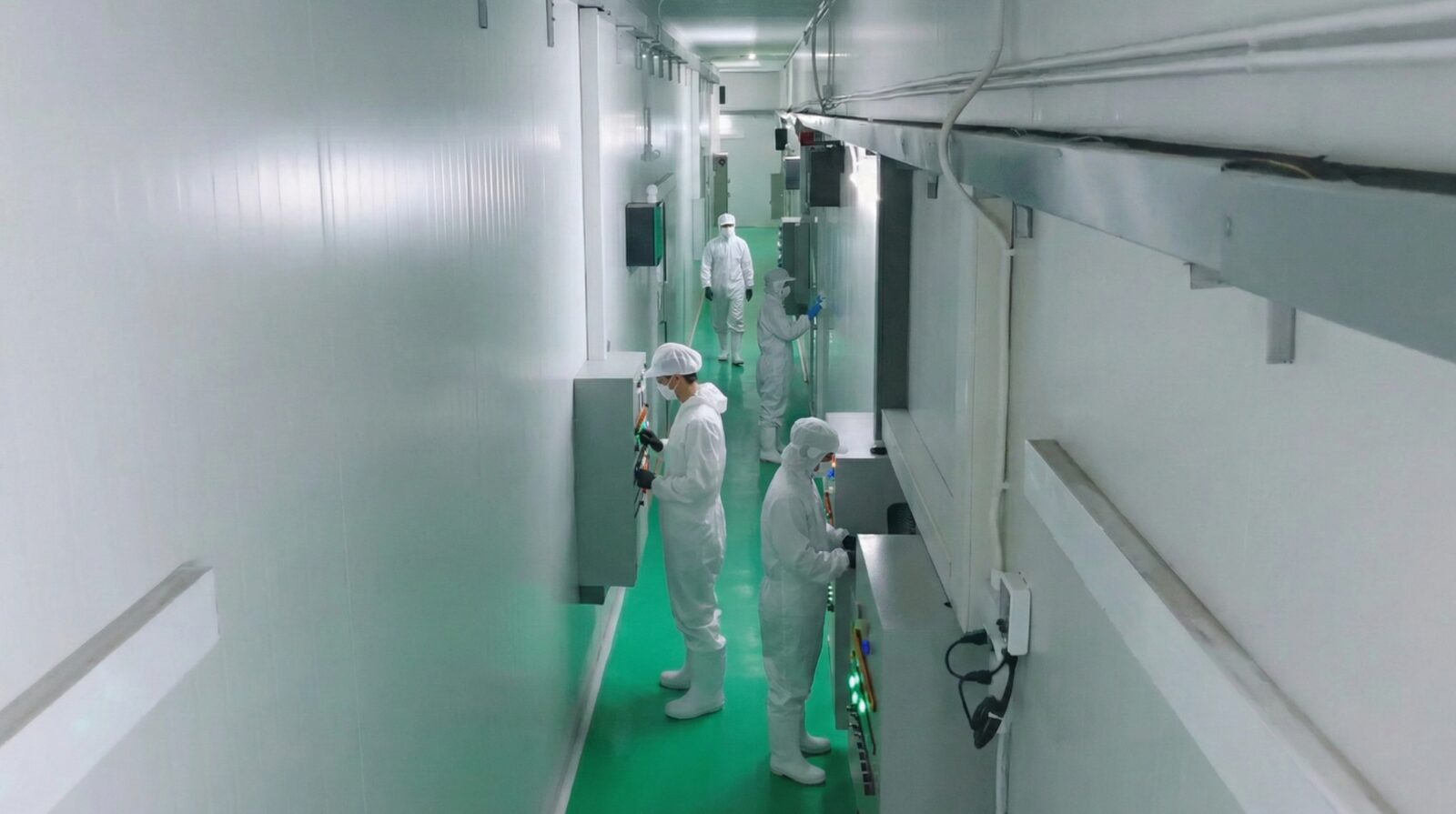
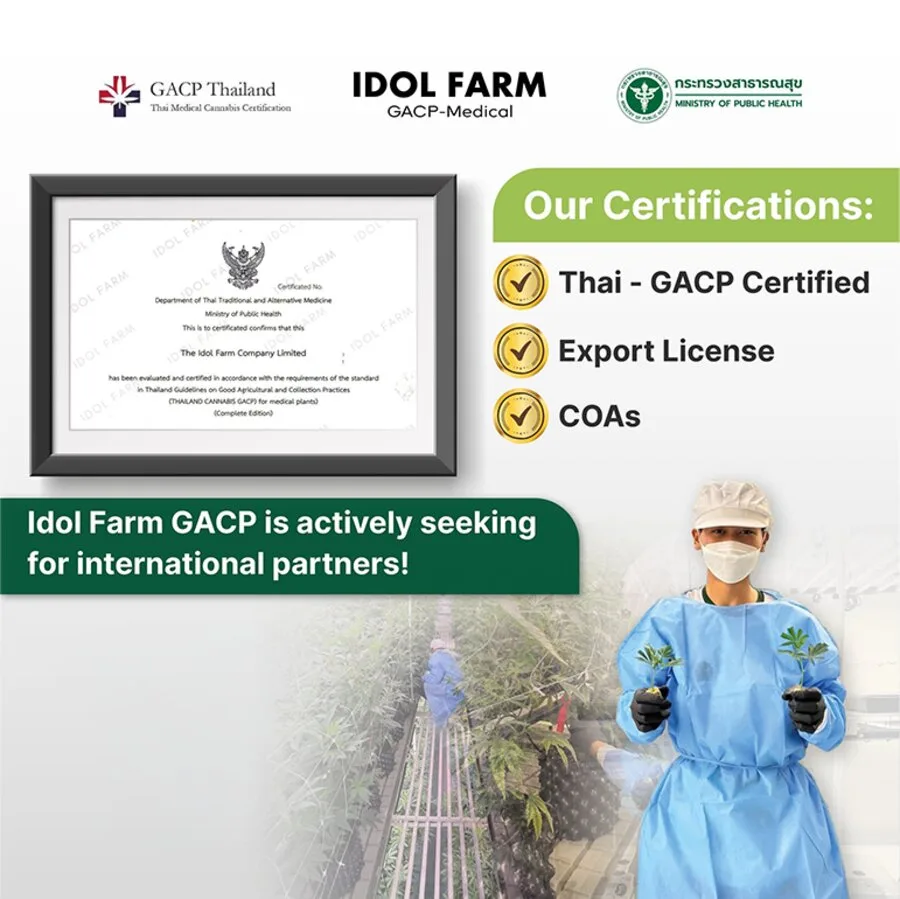
We run a fully integrated sealed indoor farm in Thailand, GACP certified, with an EU GMP partner network for onward processing. We finish around 500 kg of flower a month, more than 7 tons a year, with room to scale. White label and OEM are available, and packaging is export ready. So a buyer can take premium flower under their own brand, or biomass for their line, or work with us toward extract, from one traceable supply.
How to decide before you buy
Start at the end. Ask what your customer actually pays for. If they pay for the look, the smell and the experience, buy flower and do not compromise on the cure. If they pay for a finished product they never see raw, buy the cheapest compliant input that hits your potency target, which usually means biomass or extract. If you do both, split your order and stop paying premium prices for material headed into a tank.
The practical takeaway is simple. Name your endpoint first, then buy the form that serves it, and read the COA before you read the price. Tell us where the product is going and we will point you at the right form, send the batch data, and quote it against the job you are actually doing.