
A supplier saying its flower is clean means little. A test from a lab with no stake in the sale means everything. In the global cannabis trade, the gap between those two things is where deals are won, lost, or quietly regretted six months later at a border.
Trust in this trade is built on results that nobody at the farm can influence. That is what independent testing gives a buyer. We grow the flower, we cure it, we stand behind it. But the number that matters is the one we did not produce ourselves.
Why independent matters
When a lab has nothing to gain from the sale, its result carries weight. A supplier grading its own homework is not evidence. It is a claim. Buyers in regulated markets know the difference, and their regulators know it better.
An independent certificate of analysis, a COA, is a document written by a party with no reason to flatter the product. If the flower fails on pesticides or microbials, the lab says so. That risk is exactly what makes a passing result believable. We put every batch through that risk on purpose.
What a real COA covers
A test is only as good as its scope. A cannabinoid percentage on its own tells a buyer almost nothing about whether the flower is safe to sell into a pharmaceutical channel. A complete report closes that gap. Every batch we ship carries one that covers the full picture.
- Cannabinoid profile, including verified THC from 22 to 30 percent.
- Full terpene breakdown, so the buyer knows the flower, not just the number.
- Pesticide screening against the limits regulated markets enforce.
- Heavy metals, which a sealed indoor grow is built to keep out.
- Microbial testing, backed by standardized water activity in the cure.
Those last two points are not accidents. A fully integrated sealed indoor farm controls the inputs that cause most failures. Standardized water activity keeps mold from taking hold after harvest. The COA then proves that the control worked, batch after batch.
How we use it
Every batch goes to an outside lab, and the report travels with the flower. The buyer reads the same numbers we do. There is no summary sheet we prepared, no selective quote, no marketing gloss over the data. The lab document arrives intact.
This matters most at the point where trust is usually thinnest. A first order from a new supplier is a leap of faith. An independent COA shortens that leap to something a compliance team can actually check. We would rather earn the second order with data than win the first with a promise.
The most convincing thing a supplier can say about quality is nothing. Let the independent lab say it instead.
Testing as one link in traceability
A COA is powerful, but it is not the whole system. A single clean report means little if the buyer cannot tie it to the exact flower in the box. That is why we run full seed to shipment traceability, and treat the lab result as one verified link in that chain rather than a standalone certificate.
Each batch is tracked from the plant through trimming, curing, and packing, into export ready packaging. The COA is bound to that batch record. When a buyer scans what arrives, the paperwork and the product match. For white label and OEM partners, that same discipline carries through, so a distributor selling under its own brand can stand behind every claim on the label.
Why this holds up under scrutiny
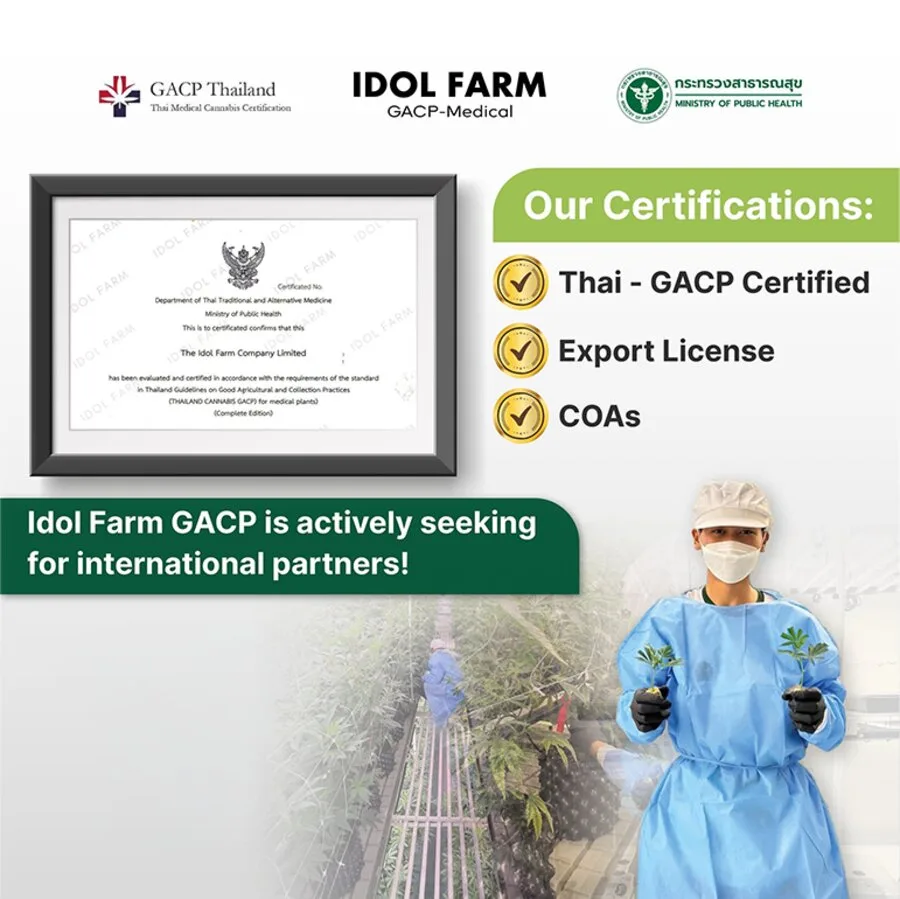
Regulated markets do not take a supplier's word, and neither should a serious importer. Independent results, tied to a traceable batch, are what survive an audit. We built the process to be checked, not admired. As a GACP certified farm working with an EU GMP partner network, we assume every batch will be questioned, and we prepare the evidence in advance.
What this means for volume buyers
Consistency is where independent testing proves its value over time. Anyone can pass one test. The harder task is passing the same panel, batch after batch, at scale. We finish around 500 kg of flower a month, more than seven tons a year, with room to grow. Every one of those batches carries its own report.
For a buyer moving real volume, that repeatability is the product as much as the flower is. It means the shipment you approve in a sample matches the pallets that follow. It means your own compliance file builds itself as the orders come in. And it means that if a market tightens its limits, you already have the data to prove where you stand.
If you are sourcing flower for a regulated channel, ask for the independent COA before you ask for anything else, and check that it covers the full panel, not just potency. Tie it to a batch you can trace. That single habit will tell you more about a supplier than any pitch. We built our process around exactly that question, so the answer is always in the box.